Surah Alaq Meaning in English, Roman Urdu, Urdu & Hindi (Word by Word)
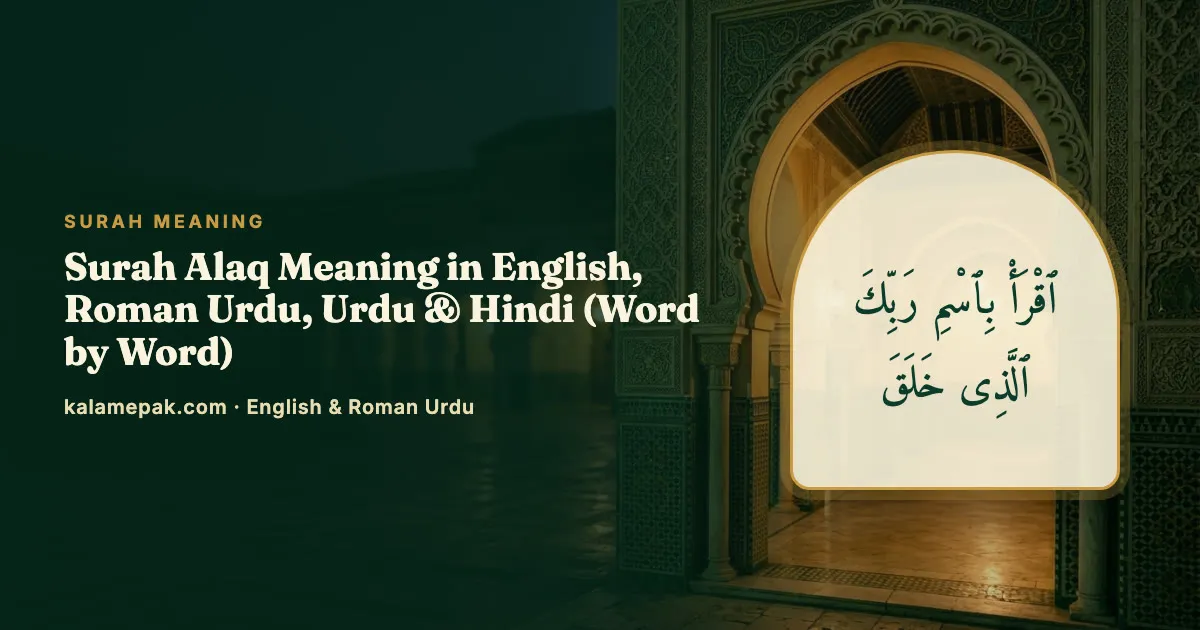
Surah Al-Alaq (surah 96, "The Clot", also called Surah Iqra) holds the first words of the Quran ever revealed: Iqraʾ bismi rabbika l-ladhī khalaq, "Read, in the name of your Lord who created." The angel said them to the Prophet ﷺ in the cave of Hira, and he came home to Khadija trembling (Sahih al-Bukhari 4953). The surah has 19 verses: the first five are that first revelation, and the rest came later, about a man who tried to stop a servant of Allah from praying. It ends with a sajdah. Below are all 19 verses in Arabic with English (Pickthall), Roman Urdu, Urdu (Maulana Junagarhi) and Hindi, then the words.
Surah Alaq with meaning, verse by verse
Read: In the name of thy Lord Who createth,
Padh apne Rabb ke naam se jis ne paida kiya
Surah Al-Alaq · 96:1
Createth man from a clot.
Jis ne insaan ko khoon ke lothde se paida kiya
Surah Al-Alaq · 96:2
Read: And thy Lord is the Most Bounteous,
Tu padhta reh, tera Rabb bade karam wala hai
Surah Al-Alaq · 96:3
Who teacheth by the pen,
Jis ne qalam ke zariye (ilm) sikhaya
Surah Al-Alaq · 96:4
Teacheth man that which he knew not.
Jis ne insaan ko woh sikhaya jise woh nahin jaanta tha
Surah Al-Alaq · 96:5
Nay, but verily man is rebellious
Sach much insaan to aape se bahar ho jaata hai
Surah Al-Alaq · 96:6
That he thinketh himself independent!
Is liye ke woh apne aap ko be-parwah (ya tawangar) samajhta hai
Surah Al-Alaq · 96:7
Lo! unto thy Lord is the return.
Yaqeenan lautna tere Rabb ki taraf hai
Surah Al-Alaq · 96:8
Hast thou seen him who dissuadeth
(Bhala) use bhi tu ne dekha jo bande ko rokta hai
Surah Al-Alaq · 96:9
A slave when he prayeth?
Jab ke woh banda namaz ada karta hai
Surah Al-Alaq · 96:10
Hast thou seen if he relieth on the guidance (of Allah)
Bhala batla to, agar woh hidayat par ho
Surah Al-Alaq · 96:11
Hast thou seen if he denieth (Allah's guidance) and is froward?
Bhala dekho to, agar yeh jhutlaata ho aur munh pherta ho to
Surah Al-Alaq · 96:13
Is he then unaware that Allah seeth?
Kya us ne nahin jaana ke Allah Ta'ala use khoob dekh raha hai
Surah Al-Alaq · 96:14
Nay, but if he cease not We will seize him by the forelock -
Yaqeenan agar yeh baaz na raha to hum us ki peshaani ke baal pakad kar ghaseetenge
Surah Al-Alaq · 96:15
The lying, sinful forelock -
Aisi peshaani jo jhooti, khata-kaar hai
Surah Al-Alaq · 96:16
Then let him call upon his henchmen!
Yeh apni majlis walon ko bula le
Surah Al-Alaq · 96:17
We will call the guards of hell.
Hum bhi (dozakh ke) piyaadon ko bula lenge
Surah Al-Alaq · 96:18
Nay, Obey not thou him. But prostrate thyself, and draw near (unto Allah).
Khabardaar! Us ka kehna hargiz na maanna, aur sajda kar aur qareeb ho ja
Surah Al-Alaq · 96:19 · sajdah
Surah Alaq meaning in Urdu
پڑھ اپنے رب کے نام سے جس نے پیدا کیا.
جس نے انسان کو خون کے لوتھڑے سے پیدا کیا.
تو پڑھتا ره تیرا رب بڑے کرم واﻻ ہے.
جس نے قلم کے ذریعے (علم) سکھایا.
جس نے انسان کو وه سکھایا جسے وه نہیں جانتا تھا.
سچ مچ انسان تو آپے سے باہر ہو جاتا ہے.
اس لئے کہ وه اپنے آپ کو بے پروا (یا تونگر) سمجھتا ہے.
یقیناً لوٹنا تیرے رب کی طرف ہے.
(بھلا) اسے بھی تو نے دیکھا جو بندے کو روکتا ہے.
جبکہ وه بنده نماز ادا کرتا ہے.
بھلا بتلا تو اگر وه ہدایت پر ہو.
یا پرہیز گاری کا حکم دیتا ہو.
بھلا دیکھو تو اگر یہ جھٹلاتا ہو اور منھ پھیرتا ہو تو.
کیا اس نے نہیں جانا کہ اللہ تعالیٰ اسے خوب دیکھ رہا ہے.
یقیناً اگر یہ باز نہ رہا تو ہم اس کی پیشانی کے بال پکڑ کر گھسیٹیں گے.
ایسی پیشانی جو جھوٹی خطا کار ہے.
یہ اپنی مجلس والوں کو بلالے.
ہم بھی (دوزخ کے) پیادوں کو بلالیں گے.
خبردار! اس کا کہنا ہرگز نہ ماننا اور سجده کر اور قریب ہو جا.
Surah Alaq meaning in Hindi
पढ़ अपने रब के नाम से जिसने पैदा किया
जिसने इंसान को ख़ून के लोथड़े से पैदा किया
तू पढ़ता रह, तेरा रब बड़े करम वाला है
जिसने क़लम के ज़रिये (इल्म) सिखाया
जिसने इंसान को वह सिखाया जिसे वह नहीं जानता था
सच मुच इंसान तो आपे से बाहर हो जाता है
इसलिए कि वह अपने आप को बे-परवाह (या तवंगर) समझता है
यक़ीनन लौटना तेरे रब की तरफ़ है
(भला) उसे भी तूने देखा जो बंदे को रोकता है
जबकि वह बंदा नमाज़ अदा करता है
भला बतला तो, अगर वह हिदायत पर हो
या परहेज़गारी का हुक्म देता हो
भला देखो तो, अगर यह झुठलाता हो और मुँह फेरता हो तो
क्या उसने नहीं जाना कि अल्लाह तआला उसे ख़ूब देख रहा है
यक़ीनन अगर यह बाज़ न रहा तो हम उसकी पेशानी के बाल पकड़ कर घसीटेंगे
ऐसी पेशानी जो झूठी, ख़ता-कार है
यह अपनी मजलिस वालों को बुला ले
हम भी (दोज़ख़ के) पियादों को बुला लेंगे
ख़बरदार! उसका कहना हरगिज़ न मानना, और सज्दा कर और क़रीब हो जा
The Urdu is Maulana Muhammad Junagarhi's translation; the Roman Urdu and Hindi are the same line in English and Devanagari letters.
Word by word
The number in the last column is the word's place in 600 Words of the Quran.
| Arabic | Say it | Meaning | In the book |
|---|---|---|---|
| ٱقْرَأْ | iqraʾ | read, recite | qaraʾa #327 |
| بِٱسْمِ رَبِّكَ | bismi rabbika | in the name of your Lord | ism #295, rabb #12 |
| ٱلَّذِى خَلَقَ | alladhī khalaq | who created | alladhī #8, khalaqa #144 |
| ٱلْإِنسَـٰنَ | al-insān | the human being | insān #228 |
| مِنْ عَلَقٍ | min ʿalaq | from a clot (clinging thing) | min #1 |
| ٱلْأَكْرَمُ | al-akram | the Most Generous | karīm #259 |
| عَلَّمَ | ʿallama | He taught | ʿallama #115 |
| بِٱلْقَلَمِ | bi-l-qalam | by the pen | |
| مَا لَمْ يَعْلَمْ | mā lam yaʿlam | what he did not know | lam #27, ʿalima #103 |
| كَلَّا | kallā | nay, no indeed | |
| لَيَطْغَىٰ | la-yaṭghā | he surely transgresses | |
| رَّءَاهُ ٱسْتَغْنَىٰ | raʾāhu staghnā | he sees himself self-sufficient | raʾā #104, ghanī #300 |
| ٱلرُّجْعَىٰ | ar-rujʿā | the return | rajaʿa #262 |
| أَرَءَيْتَ | a-raʾayta | have you seen? | raʾā #104 |
| يَنْهَىٰ | yanhā | he forbids, stops | nahā #360 |
| عَبْدًا إِذَا صَلَّىٰ | ʿabdan idhā ṣallā | a servant when he prays | ʿabd #221, idhā #24, ṣalāh #208 |
| عَلَى ٱلْهُدَىٰ | ʿala l-hudā | on the guidance | ʿalā #9, hudā #189 |
| أَمَرَ بِٱلتَّقْوَىٰ | amara bi-t-taqwā | he commanded piety | amara #309, taqwā #431 |
| كَذَّبَ وَتَوَلَّىٰ | kadhdhaba wa tawallā | he denied and turned away | kadhdhaba #123, wallā #273 |
| ٱللَّهَ يَرَىٰ | Allāha yarā | Allah sees | Allāh #2, raʾā #104 |
| لَّمْ يَنتَهِ | lam yantahi | he does not stop | intahā #575 |
| لَنَسْفَعًا بِٱلنَّاصِيَةِ | la-nasfaʿan bi-n-nāṣiyah | We will surely drag by the forelock | |
| كَـٰذِبَةٍ خَاطِئَةٍ | kādhibatin khāṭiʾah | lying, sinful | kadhib #358 |
| فَلْيَدْعُ نَادِيَهُ | fal-yadʿu nādiyah | then let him call his assembly | daʿā #305, nādā #314 |
| سَنَدْعُ ٱلزَّبَانِيَةَ | sa-nadʿu z-zabāniyah | We will call the guards (of Hell) | daʿā #305 |
| لَا تُطِعْهُ | lā tuṭiʿhu | do not obey him | lā #3, aṭāʿa #210 |
| وَٱسْجُدْ | wa-sjud | and prostrate | sajada #400 |
| وَٱقْتَرِب | wa-qtarib | and draw near | qarīb #526 |
Two words carry the first five verses: khalaqa, He created (twice), and ʿallama, He taught (twice). The Lord who made man from a clinging clot is the Lord who teaches him with a pen. Iqraʾ itself, "read", is the root of Qurʾān. And the last verse answers the first: it began with read, it ends with prostrate and draw near. If you are learning the Quran's words, almost every word in this table is in the book.
The first revelation (Bukhari 4953)
Aisha narrates that revelation to the Prophet ﷺ began with true dreams. Then he came to love being alone, and would worship in the cave of Hira for nights at a time, going back to Khadija for provisions. One day the truth came to him there: the angel came and said Read. He answered, "I am not a reader" (mā anā bi-qāriʾ). The angel held him and pressed him until he could bear no more, released him, and said Read again; the same answer, a second time, a third time. Then the angel said the words: Iqraʾ bismi rabbika l-ladhī khalaq. Khalaqa l-insāna min ʿalaq. Iqraʾ wa rabbuka l-akram. Alladhī ʿallama bi-l-qalam, up to ʿallama l-insāna mā lam yaʿlam (96:1–5). He came back with his shoulders trembling and said to Khadija, "Cover me, cover me." When the fear had passed he told her, "I feared for myself." She said: never; by Allah, Allah will never disgrace you, for you keep ties with your relatives, speak the truth, carry the burdens of the weak, earn for the poor, honour the guest and help those struck by misfortune. Then she took him to her cousin Waraqa ibn Nawfal, who said: this is the same angel that was sent to Musa (Sahih al-Bukhari 4953; the same story opens the whole collection as hadith 3).
So the first five verses were the first revelation; the rest of the surah (6–19) was revealed later, in Makkah, when a chief of the Quraysh tried to stop the Prophet ﷺ from praying at the Kaaba. The commentators name him; the surah does not, and this page follows the surah.
The shape of the surah
- Verses 1–5: the first revelation. Read, in the name of your Lord who created man from a clot. Read; your Lord is the Most Generous, who taught by the pen, who taught man what he did not know.
- Verses 6–8: man forgets. He sees himself self-sufficient and oversteps; but the return is to your Lord.
- Verses 9–14: the one who stops prayer. Have you seen the man who forbids a servant from praying? What if that servant is on guidance and commands piety? And what if the man denies and turns away: does he not know that Allah sees?
- Verses 15–18: the warning. If he does not stop, We will drag him by his lying, sinful forelock. Let him call his assembly; We will call the guards of Hell.
- Verse 19: the answer. Do not obey him. Prostrate, and draw near.
Surah Alaq in namaz
Nineteen verses is longer than most of Juz Amma, so it usually comes after Surah Teen and before the longer surahs. Verse 19 carries the sajdah mark (۩); when it is recited the reciter and listeners make sajdah tilawat, and the rules for that are a matter for your teacher, not this page. The dua for knowledge that goes naturally with this surah is Rabbi zidni ilma, "my Lord, increase me in knowledge": the Lord who taught by the pen is the one you ask.
Sources: Quran text from the Quranic Arabic Corpus and Tanzil · verse meanings in English from Marmaduke Pickthall and in Urdu from Maulana Muhammad Junagarhi · meanings of duas and phrases in Roman Urdu, Urdu and Hindi are our own plain renderings · hadith with collection and number, linked to sunnah.com. How we check every article →
Frequently asked questions
Which surah was revealed first?
The first five verses of Surah Al-Alaq, 'Iqra bismi rabbika l-ladhi khalaq', in the cave of Hira. Aisha narrates the full story in Sahih al-Bukhari 4953: the angel pressed the Prophet ﷺ three times and said 'Read', and he returned to Khadija trembling.
What does 'Iqra bismi rabbikal lazi khalaq' mean?
Read, in the name of your Lord who created (Pickthall: 'Read: In the name of thy Lord Who createth'). 'Iqra' is a command, 'read' or 'recite'; 'bismi rabbika' is 'in the name of your Lord'; 'alladhi khalaq' is 'who created'.
Is there a sajdah in Surah Alaq?
Yes. Verse 19 ends 'wasjud waqtarib', 'prostrate and draw near', and carries the sajdah mark (۩). It is one of the places of sajdah tilawat; the Quran's text marks it, and this page does not go into the fiqh of when it is due.
How many verses does Surah Alaq have?
Nineteen verses. It is surah 96, Al-Alaq, between Surah Teen (95) and Surah Qadr (97).
Who is verses 9 to 19 about?
A man who stopped a servant of Allah from praying. The commentators name a chief of the Quraysh who threatened the Prophet ﷺ at prayer; the surah itself keeps him nameless, so the warning fits anyone who does the same.