Sana Dua Meaning: Subhanakallahumma Word by Word
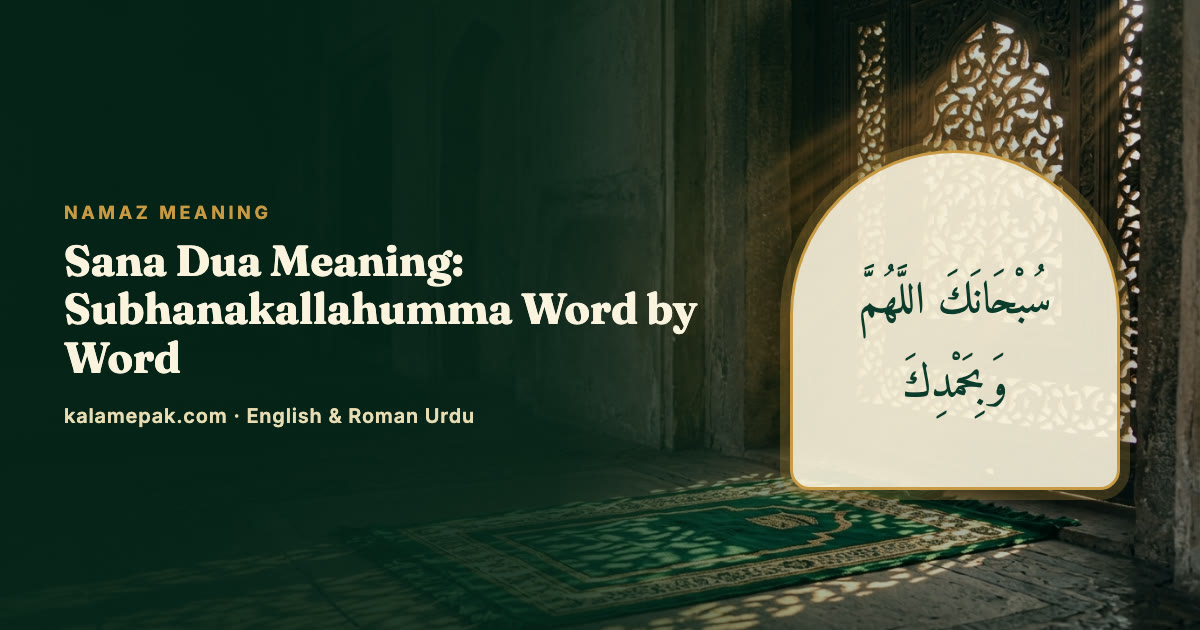
Sana meaning: "Glory be to You, O Allah, and praise be to You. Blessed is Your name, exalted is Your majesty, and there is no god but You." In Roman Urdu: Aey Allah! Tu paak hai aur Teri hi taareef hai, Tera naam barkat wala hai, Teri shaan buland hai, aur Tere siwa koi maabood nahin. It is the short opening praise said at the start of namaz, and in just ten Arabic words it declares Allah free of every fault, praises Him, and ends with the testimony that there is no god but Him.
Sana dua in Arabic, English and Roman Urdu
Glory be to You, O Allah, and praise be to You. Blessed is Your name, exalted is Your majesty, and there is no god but You.
Aey Allah! Tu paak hai aur Teri hi taareef hai, Tera naam barkat wala hai, Teri shaan buland hai, aur Tere siwa koi maabood nahin.
Sana · Abu Dawud 775–776, Tirmidhi 242–243 (from Aisha and Abu Saʿid al-Khudri, may Allah be pleased with them)
Pronunciation: Subḥānaka Allāhumma wa bi-ḥamdika, wa tabārakasmuka, wa taʿālā jadduka, wa lā ilāha ghayruk.
Sana meaning in Hindi
ऐ अल्लाह! तू पाक है और तेरी ही तारीफ़ है, तेरा नाम बरकत वाला है, तेरी शान बुलंद है, और तेरे सिवा कोई माबूद नहीं।
(This is the same Roman Urdu meaning written in Hindi script.)
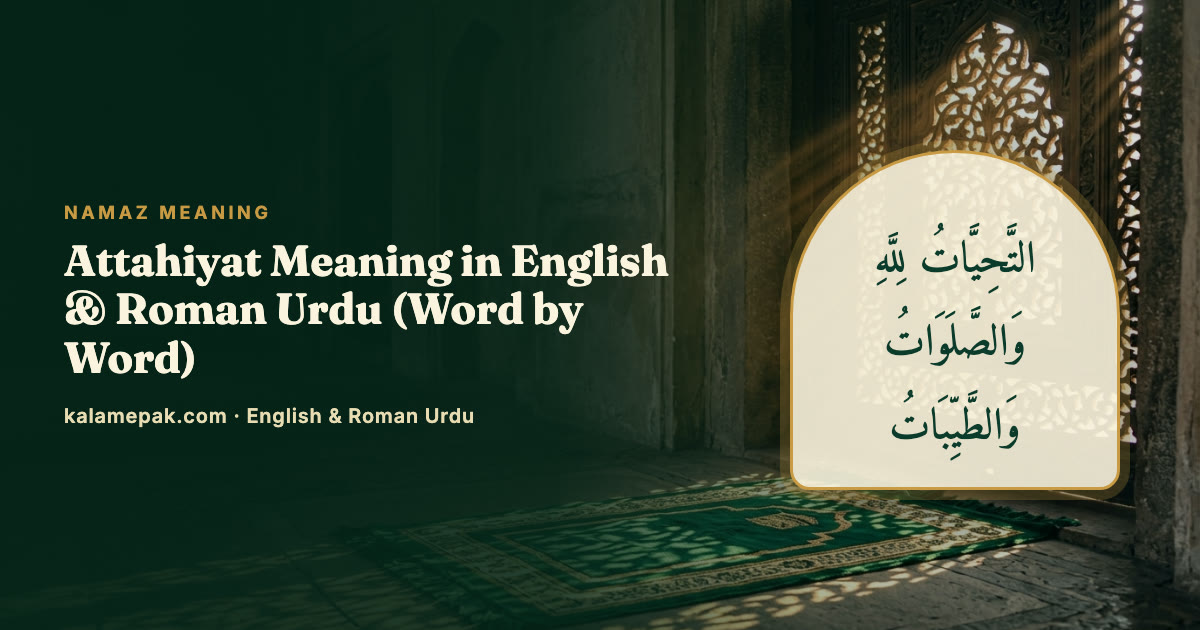
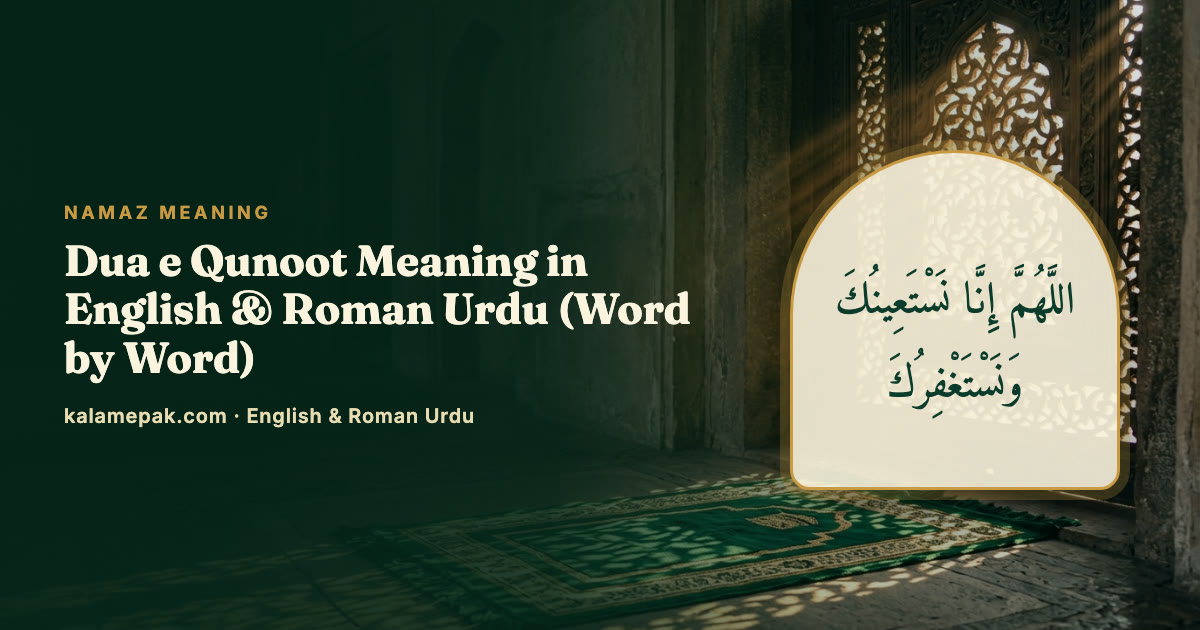
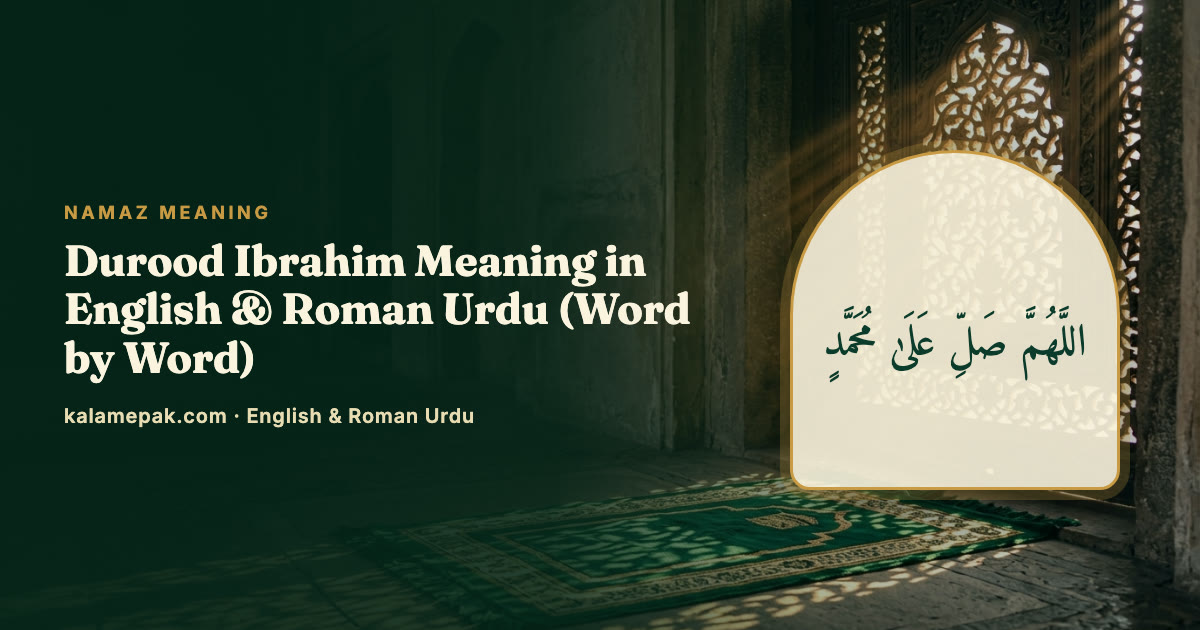
Subhanakallahumma word by word
| Arabic | Say it | Meaning | Notes |
|---|---|---|---|
| سُبْحَانَكَ | subḥānaka | Glory be to You | subḥān (word #398 in the book) + -ka "You" |
| اللَّهُمَّ | Allāhumma | O Allah | a special form of calling Allah; Allah is word #2 |
| وَبِحَمْدِكَ | wa bi-ḥamdika | and with Your praise | wa "and" + bi "with" + ḥamd "praise" (#218) + -ka "Your" |
| وَتَبَارَكَ | wa tabāraka | and blessed is | from the root of barakah (not in the 600 list) |
| اسْمُكَ | (i)smuka | Your name | ism "name" (#295) + -ka "Your" |
| وَتَعَالَىٰ | wa taʿālā | and exalted (high) is | root ʿ-l-w, "height" (not in the 600 list) |
| جَدُّكَ | jadduka | Your majesty | jadd "majesty, greatness" + -ka |
| وَلَا | wa lā | and (there is) no | lā "not, no" (#3, 1,742 times) |
| إِلَٰهَ | ilāha | god | ilāh "god, deity" (#283) |
| غَيْرُكَ | ghayruka | other than You | ghayr "other than" (#37) + -ka |
Notice the little -ka ("You / Your") at the end of five words. The whole Sana is spoken directly to Allah: Your glory, Your praise, Your name, Your majesty, none other than You. Once you hear that -ka, the Sana stops being a formula and becomes a conversation.
The five parts of Sana, simply explained
- Subḥānaka Allāhumma — "Glory be to You, O Allah." Subḥān means declaring Allah free and far above every fault, weakness or imperfection. (Roman Urdu: Tu paak hai.)
- Wa bi-ḥamdika — "and praise be to You." Where subḥān removes every imperfection, ḥamd affirms every perfection and gives thanks. The two together are a complete praise. You'll meet this same pair in the Quran and in the ruku.
- Wa tabārakasmuka — "Blessed is Your name." Even Allah's name is full of barakah. That's why we begin actions with Bismillah — "in the name of Allah".
- Wa taʿālā jadduka — "exalted is Your majesty." His greatness is high above anything we can imagine. (Teri shaan buland hai.)
- Wa lā ilāha ghayruk — "and there is no god but You." The Sana ends with tawḥīd, the same testimony you'll repeat in the Attahiyat at the end of the prayer.
Where Sana is said in namaz
Sana is said once, in the first rakʿah, right after the opening Allāhu akbar and before the taʿawwudh (aʿūdhu billāhi…), Bismillah and Surah Al-Fatiha. It isn't repeated in the later rakʿahs.
Other authentic opening duas are also reported, and some schools prefer one of those; Sana is the one most taught in India and Pakistan. The details of how it is recited differ slightly between schools, so follow what your scholars teach. For the whole prayer in order, see namaz ka tarjuma, or the quick list in what to recite in namaz.
The Quran verses the Sana echoes
Sana is not a Quran verse, but almost every phrase in it has a clear echo in the Quran:
| Sana phrase | Quran | Meaning (Pickthall) |
|---|---|---|
| subḥāna… | سُبْحَٰنَ ٱلَّذِىٓ أَسْرَىٰ بِعَبْدِهِۦ (17:1) | "Glorified be He Who carried His servant by night…" |
| …wa bi-ḥamdika | فَسَبِّحْ بِحَمْدِ رَبِّكَ (110:3) | "Then hymn the praises of thy Lord" |
| tabāraka… | تَبَٰرَكَ ٱلَّذِى بِيَدِهِ ٱلْمُلْكُ (67:1) | "Blessed is He in Whose hand is the Sovereignty" |
| taʿālā jadduka | تَعَٰلَىٰ جَدُّ رَبِّنَا (72:3) | "exalted be the glory of our Lord!" |
| lā ilāha… | ٱللَّهُ لَآ إِلَٰهَ إِلَّا هُوَ (2:255) | "Allah! There is no deity save Him" |
The one in Surah Al-Jinn is especially striking — the same two words, taʿālā jadd:
And (we believe) that He - exalted be the glory of our Lord! - hath taken neither wife nor son,
Aur beshak hamare Rabb ki shaan badi buland hai, na us ne kisi ko (apni) biwi banaaya hai na beta
Surah Al-Jinn · 72:3
And Surah An-Nasr brings tasbīḥ and ḥamd together exactly as the Sana does. When you learn Quran words, your namaz texts open up — and when you understand your namaz, Quran verses start to feel familiar.
Tips to feel the meaning while you pray
- Slow down on -ka. Each time you say -ka ("You"), remember you're addressing Allah directly.
- Pair it with the ruku. In ruku you'll say Subḥāna rabbiya l-ʿaẓīm — the same subḥān. The prayer opens and continues with the same glorification. See ruku and sajdah tasbih meaning.
- Let the last line land. Wa lā ilāha ghayruk — "there is no god but You." Before Fatiha, it's a moment to set aside whatever else is competing for your attention.
- Learn it in a day. If you're working through our 7-day plan to understand your namaz, Sana is Day 1.
Words from the Sana you'll meet across the Quran
Seven of the Sana's words are in our list of the Quran's 600 most common words: Allah (2,699 times), lā (1,742), ilāh (147), ghayr (147), ḥamd (43), subḥān (41) and ism (39). Learning them here means recognising them in hundreds of verses. That's the idea behind our book, 600 Words of the Quran — start from what you already say, and the whole Quran becomes more familiar.
Frequently asked questions
What is the meaning of Sana in namaz?
Sana means: Glory be to You, O Allah, and praise be to You. Blessed is Your name, exalted is Your majesty, and there is no god but You. It is a short praise of Allah said at the start of the prayer.
When is Sana recited in namaz?
Sana is recited in the first rakʿah, after the opening takbir (Allahu akbar) and before the taʿawwudh, Bismillah and Surah Al-Fatiha.
What is the source of the Sana dua?
It is reported in Abu Dawud (775–776) and Tirmidhi (242–243), from Aisha and Abu Saʿid al-Khudri, may Allah be pleased with them.
Is Sana the only opening dua?
No. Other authentic opening duas are also reported, and some schools prefer one of those. Sana is the one most commonly taught in India and Pakistan.